

Key Factors That Can Speed Up or Delay Your Fence Installation Project
Enhancing your property with a beautiful, durable fence is an exciting and highly rewarding decision. Whether your primary goal is to boost your home’s curb appeal, secure a safe outdoor play space for your children and pets, or establish a private backyard oasis, a new fence is a phenomenal long-term investment. However, once you have decided on the perfect design, the immediate next question is usually: "How long is this going to take?"
We pride ourselves on delivering exceptional quality craftsmanship alongside efficient, reliable turnaround times. Yet, it is important to remember that every property and project is entirely unique. When you are planning a fence installation, understanding the various environmental, logistical, and material variables that dictate the project timeline can help you set realistic expectations and prepare your home accordingly. While our professional crews work diligently to complete your project as swiftly as possible, several key elements influence the ultimate schedule.
1. Project Size and Overall Scope
The most straightforward variable that influences your timeline is the sheer size of the job. It goes without saying that enclosing a massive, multi-acre suburban estate will require significantly more time and labor than fencing in a compact urban courtyard. Furthermore, the overall scope encompasses much more than just the raw linear footage of the perimeter.
If your property currently has an old, decaying fence that needs to be dismantled and hauled away before the new structure can be erected, this teardown and disposal process will typically add an entire day to the schedule. Additionally, the number of gates you choose to include will alter the timeframe, as gates require precise leveling, specialized hardware, and careful balancing to ensure they function properly for years to come. According to Home Guide, installing a typical fence takes three to four days on average, depending on its type, length, material, and scope. To speed up your fence installation, you can proactively ensure that the fence line is entirely clear of debris, patio furniture, and overgrown vegetation before the crew arrives, giving them immediate and unimpeded access to the work area.
2. Fence Material and Customization Level
The specific products you select for your perimeter play a massive role in how quickly the structure comes together. We offer a wide array of premium options, and each material handles differently in the field.
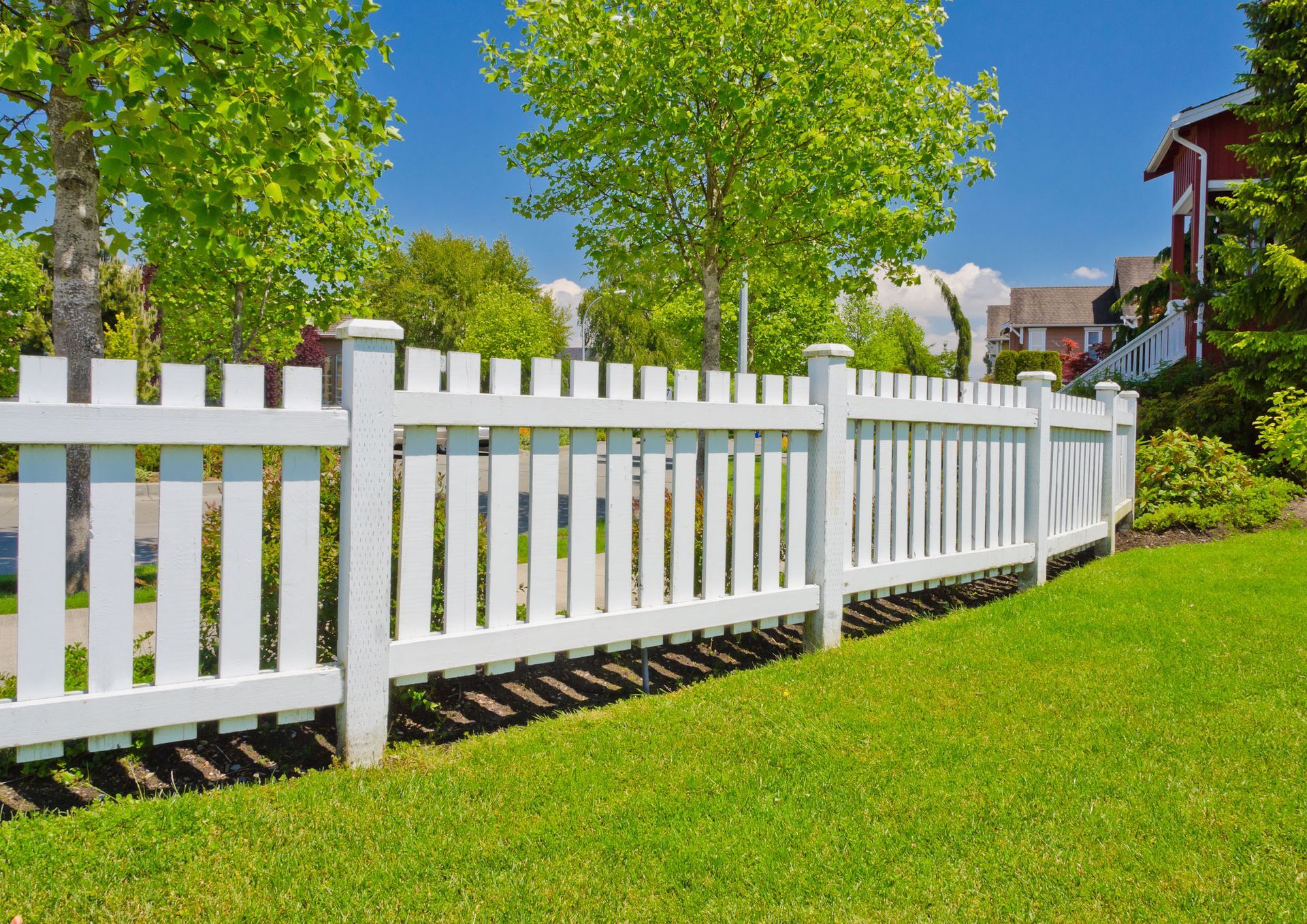
For instance, high-quality vinyl and ornamental aluminum often feature streamlined, modular panel systems. Because these modern components are engineered for highly efficient assembly, a standard vinyl perimeter can often be erected quite rapidly once the posts are securely set in concrete and fully cured. Conversely, a custom-built wooden fence will inherently take longer. If you opt for a traditional stick-built cedar design where every single picket is individually measured, leveled, and nailed on-site, the manual labor hours naturally increase. Furthermore, any high-level customization will require additional time. Adding intricate lattice work, decorative post caps, custom-built arbors, or specialized security latches means the crew must take extra time for detail-oriented craftsmanship. Choosing standard, prefabricated materials can significantly accelerate your fence installation, while highly customized architectural features will require you to exercise a bit more patience for the sake of a personalized masterpiece.
3. Property Terrain and Soil Condition
Your yard might look perfectly flat and cooperative on the surface, but what lies beneath the grass can dramatically alter the pace of the physical work. Digging the post holes is arguably the most labor-intensive phase of the entire process. If your property features soft, loamy soil without obstructions, mechanical augers can drill down to the required depth in a matter of minutes.
However, New England soil is notoriously unpredictable. If the excavation crew strikes heavy clay, thick tree roots, or massive subterranean granite boulders, the digging process slows to a crawl as manual digging bars and heavy-duty equipment are brought in to clear the path. Above ground, the topography is equally impactful. A perfectly level yard allows for rapid progress. In contrast, if your property features steep hills, uneven berms, or sharp structural drops, the materials must be carefully stepped or racked to seamlessly follow the contour of the land. This requires meticulous mathematical calculations, precise cutting, and continuous leveling. Addressing these unique terrain challenges is an unavoidable part of a professional fence installation, so recognizing that steep slopes or rocky soil may add a day to your timeline is a crucial part of the planning phase.
4. Local Permits and HOA Approvals
One of the most common causes of delay has absolutely nothing to do with hammers, nails, or dirt — it is entirely administrative. Before any digging can commence, you must ensure that your project strictly complies with all local municipal zoning laws and neighborhood guidelines.
Many towns require homeowners to apply for and secure a formal building permit prior to constructing a property boundary. The speed at which your local town hall processes these applications can vary wildly; some offices grant approvals in a few days, while others might take weeks, especially during the remarkably busy spring and summer construction seasons. Additionally, if you live in a community governed by a Homeowners Association (HOA), you will likely need to submit your design for architectural review. HOAs often have strict, non-negotiable regulations regarding allowable materials, maximum heights, and approved paint colors. If you fail to secure these permissions beforehand, your project could be hit with a stop-work order, bringing everything to a grinding halt. Proactively handling this paperwork weeks in advance is the absolute best way to guarantee your fence installation starts exactly on schedule.
5. Utility Locating and Site Preparation
Safety is always the top priority on any construction site, and driving a heavy steel post hole digger blindly into the earth is incredibly dangerous. Beneath the surface of your yard lies a complex, invisible web of modern hazards, including natural gas lines, electrical conduits, high-pressure water pipes, and delicate telecommunication cables.
Striking any of these can lead to disastrous physical consequences, major neighborhood outages, and massive financial fines. Therefore, coordinating with utility locators — such as the Dig Safe program here in Massachusetts — is a strict, non-negotiable prerequisite. The law requires that utility companies be given several days' notice to come to your property and prominently mark the exact locations of their underground lines using colored paint and physical flags. Sometimes, getting the regional locators out to your property can be delayed due to high seasonal demand. To avoid an unnecessary bottleneck, this step must be scheduled well in advance of the crew's designated arrival. By organizing the utility marking meticulously, you ensure that the physical fence installation can proceed safely, legally, and without sudden interruptions.
6. Weather Conditions and Seasonal Changes
Finally, there is the one undeniable variable that neither you nor your chosen contractor can control: Mother Nature. Here in the Greater Boston area, the weather is famously fickle, and seasonal shifts aggressively dictate the pace of outdoor construction.
A clear, sunny, temperate week is the absolute ideal scenario for rapid progress. However, severe weather can and will enforce unexpected delays. Torrential rain not only makes for a miserable working environment, but it can also turn your yard into a muddy swamp, causing freshly dug post holes to collapse in on themselves before the concrete can be poured. Extreme heat in the peak of July requires crews to take frequent safety breaks to prevent heat exhaustion. In the late fall and winter months, the dreaded New England frost line becomes a formidable obstacle; frozen, rock-hard ground forces crews to use specialized, inherently slower techniques to break through the icy earth. While our teams are incredibly resilient, severe weather events like heavy thunderstorms or intense snowfall will naturally push back the schedule. Being flexible and understanding that your fence installation is at the mercy of the elements will make the overall process far less stressful.
When you are ready to transform your landscape, contact Boston Fence & Vinyl to schedule your fence installation.
Share On: